
Balanced Approach to Risk
2025
A diversified investment strategy, balancing traditional and alternative markets. Its allocation reflects a balanced approach—growth-focused but diversified across traditional equities, commodities, currencies, and digital assets. It’s designed to capture upside while managing downside risk through non-correlated assets.
Investment Allocation
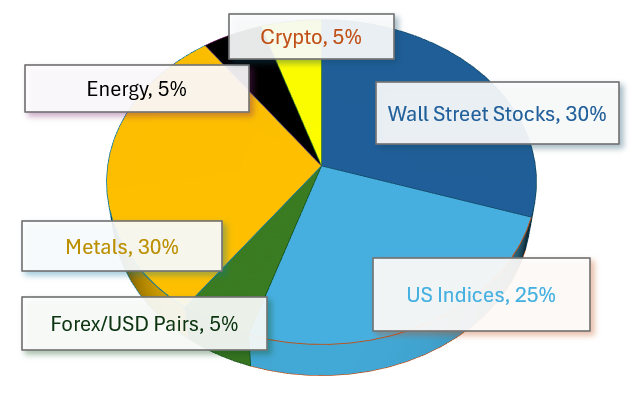
We aim to achieve balanced growth while managing risk through diversified exposure across multiple asset classes. By allocating more capital to Wall Street stocks and US indices, we target steady appreciation from established markets. The strategy seeks to capture opportunities across traditional and emerging markets, aiming for long-term capital appreciation with a resilient portfolio structure.
-
Wall Street Stocks 30% – Core growth engine. Offers exposure to individual companies with potential for price to grow.
-
US Indices 25% – Helps smooth volatility from individual stocks.
-
Forex/USD Pairs 5% – Provides global diversification and hedges against currency risk.
-
Metals / Gold 30% – Inflation hedge and safe-haven asset. Balances risk during economic uncertainty.
-
Energy / Crude Oil 5% – Cyclical sector with potential upside during supply shocks or geopolitical tensions.
-
Crypto 5% – High-risk, high-reward; Offers exposure to emerging digital assets and blockchain innovation
Investment Considerations
This strategy reflects a balanced, multi-asset approach designed to capture growth across traditional and alternative markets while managing risk through diversification. With over half the portfolio allocated to Wall Street stocks and U.S. indices, it leans into equity-driven growth, supported by global macro trends and corporate earnings. The inclusion of Forex and metals introduces defensive and inflation-hedging elements, while energy and crypto provide cyclical and speculative upside. The strategy is well-suited for investors seeking long-term capital appreciation with exposure to both stability and innovation.
♦ Equity-Driven Core -Wall Street Stocks and U.S. Indices: This is the engine of the portfolio. Wall Street stocks allow for targeted exposure to high-growth sectors or blue-chip leaders, while U.S. indices offer broad market participation and reduce single-stock risk. Together, they provide a strong foundation for capital appreciation, especially in stable or expanding economic environments.
♦ Currency Diversification – Forex/USD Pairs: This allocation introduces global exposure and acts as a hedge against domestic currency weakness.
♦ Inflation Hedge – Metals: Gold and silver serve as traditional safe havens, especially during inflationary periods or market stress. This allocation helps preserve capital when equities falter.
♦ Cyclical Upside – Energy: A small, strategic allocation, energy assets like oil and gas can outperform during inflationary spikes, supply disruptions, or geopolitical tensions. However, they are sensitive to demand cycles and regulatory shifts.
♦ Speculative Growth – Crypto: Crypto offers asymmetric upside and exposure to blockchain innovation, but it comes with extreme volatility and regulatory uncertainty. There is a strong belief in the long-term viability of digital assets.
Calculated Risk and Performance
In this section, we aim to estimate the potential risk of loss and potential performance based on historical data and current market conditions. The strategy involves algorithmic and active approach that could result in having better performance than just a passive approach. The timing of each investment is crucial for assessing both potential losses and expected returns on an annual basis.
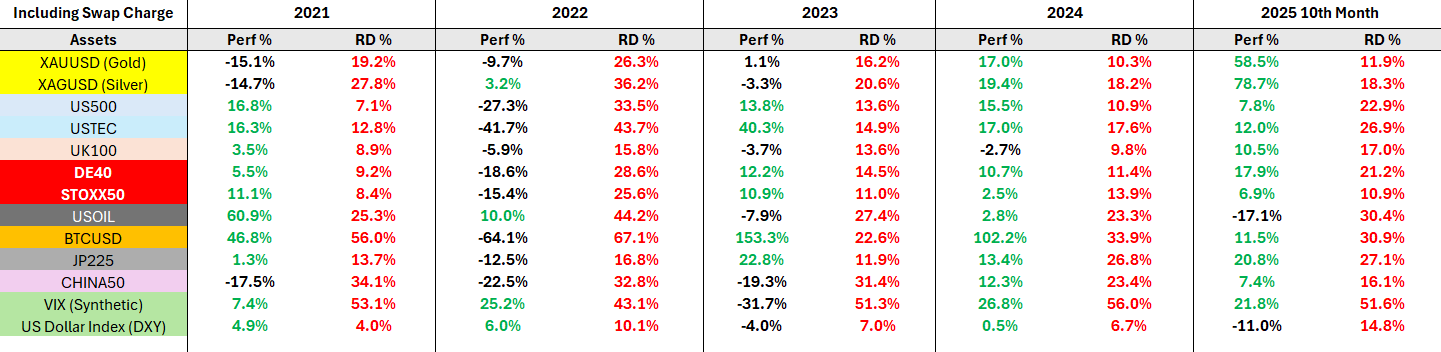
RD: This is Relative Drawdown which is a volaitlity metric. During the period 2021-2025 we see that maximum relative dawdown for metals is close to 30%. We take this factor into consideration when assessing risk of loss. 2022 was a year full of uncertainty and risk-assets (including stocks and metals) have experienced huge drawdowns.
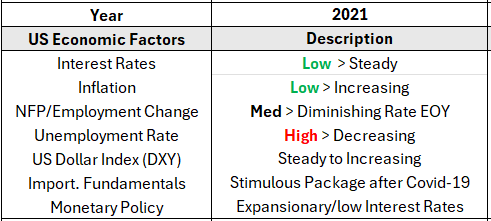
♦ In 2020, inflation decreased following the onset of COVID-19, while unemployment rose sharply. In response, interest rates were lowered to stimulate the economy. By 2021, the unemployment rate began to decline, but inflation increased due to a surge in demand for goods and services. This heightened demand also drove up the need for oil in business operations, leading to higher oil prices. The value of the US dollar weakened, making it relatively cheaper in 2021. Metals were less favored as investments; instead, people turned to stocks and riskier assets such as cryptocurrencies. This shift eventually contributed to rising inflation.
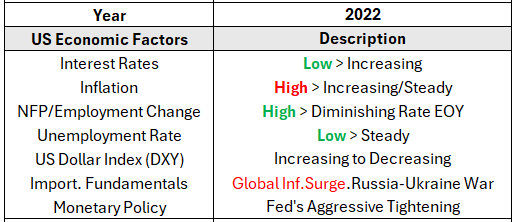
♦ In 2022, the unemployment rate fell to low levels, but inflation rose significantly. To combat inflation, the Federal Reserve began raising interest rates aggressively. As a result, the US dollar appreciated, making foreign investment in US stocks less attractive. Growing economic uncertainty led to reduced confidence in cryptocurrencies and even metals. However, metals were still favored by some investors as a hedge against inflation. The onset of war further drove up crude oil prices during the early stages.
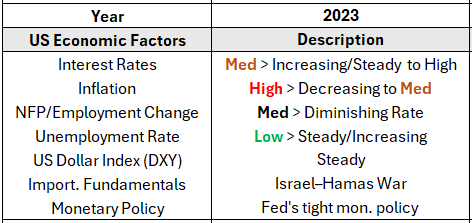
♦ In 2023, interest rates remained high, and inflation began to decline as anticipated. Labor market data indicated a strong U.S. economy that was not severely impacted by elevated interest rates, with overall expectations remaining positive. The unemployment rate stayed low, and the U.S. dollar weakened slightly. After a challenging 2022, U.S. stocks made a remarkable recovery, while cryptocurrencies benefited from the renewed risk-on sentiment. Oil prices held steady, resisting a decline, particularly due to ongoing geopolitical tensions and conflicts.
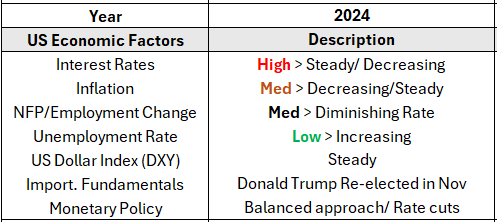
♦ In 2024, as inflation declined, interest rate cuts were initiated to address emerging labor-related risks. Unemployment began to rise slightly, while the U.S. dollar remained stable without becoming more expensive. The U.S. stock market delivered a strong performance, fueled by falling inflation, increased investor confidence, and easing financial conditions. Enthusiasm around artificial intelligence played a major role in driving investments in both stocks and cryptocurrencies, reflecting a renewed risk-on sentiment. Crude oil prices rose but eventually stabilized.
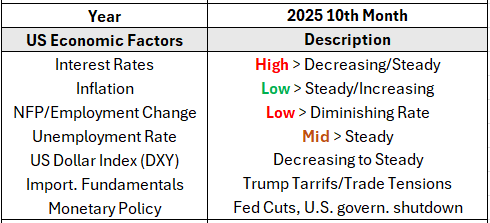
♦ In 2025, interest rates in the U.S. remained high, while other central banks pursued aggressive rate cuts. Tariffs introduced by President Trump created significant uncertainty, causing stock markets to decline sharply until April. Although inflation was substantially reduced, labor market data began to reveal notable negative trends throughout the year. A government shutdown further fueled investor anxiety, triggering a risk-off sentiment. As a result, investors sought refuge in metals. Both stocks and cryptocurrencies were negatively impacted by the shutdown. Crude oil prices continued to decline.
Strategy Asset Allocation- November 2025
In 2025, despite US president Trump’s tariff pressures (Ongoing trade tensions, particularly with China), political uncertainty, some sectors like quantum computing and energy have surged, while others like consumer staples and certain industrials have lagged. Wall Street analysts remain cautiously optimistic, however, the consensus is that 2025 will close with positive returns, supported by strong fundamentals, AI-driven innovation, and a favorable interest rate environment. For the rest of 2025, we will consider 100% equity allocation from the original full equity amount, taking the usual expected risk level.
– Underlying Asset: Wall Street Stocks –
In early 2025, Wall Street experienced a sharp and unexpected drawdown, particularly in April, triggered by sweeping trade tariffs announced by President Trump on what was dubbed “Liberation Day.” The move sparked fears of a global recession, leading to panic selling across major indices and the steepest market decline since 2020. Investor sentiment shifted dramatically, with retail investors exiting positions and forecasts turning bearish. However, the market found its footing by mid-April, rebounding on the back of strong earnings and renewed optimism in AI and tech sectors, ultimately recovering much of its losses by October. As the year closes, Wall Street remains cautiously optimistic, with investors rotating into industrials, energy, and defense alongside continued enthusiasm for AI and infrastructure plays.
Palantir Technologies Inc. / PLTR
Initial assessment date: 28.10.2025
Palantir Technologies, Inc. engages in the business of building and deploying software platforms that serve as the central operating systems for its customers. A standout performer in data analytics and defense tech. Its government contracts and AI capabilities have made it one of the top S&P 500 gainers.
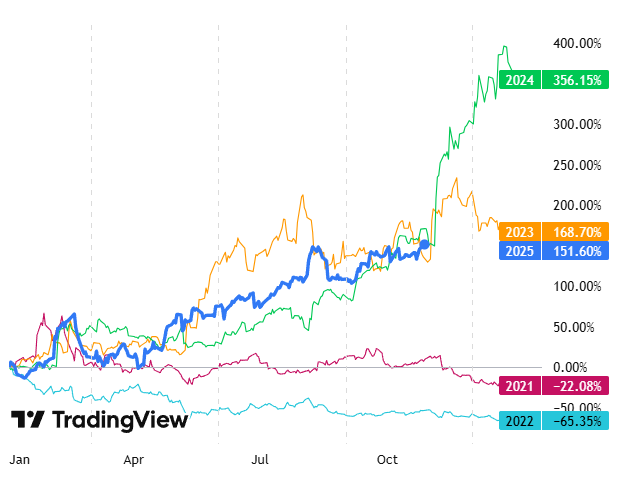
PLTR Seasonals – Performance per Year
PLTR Analysis & Forecast
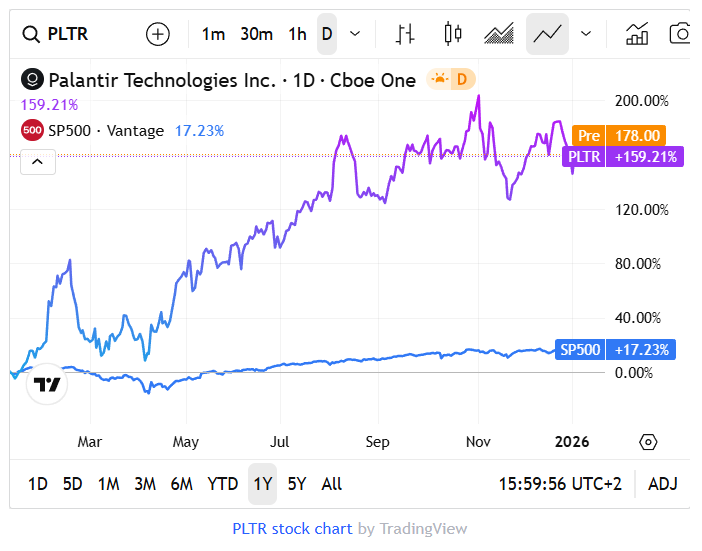
♦ Price: 189.18 USD
♦ Forecast Value: 1 year Max is 215 USD Upside: 13.6% in 2026
♦ Seasonals: Based on 4Year Average 152.77% Upside: 1%
♦ Asset Type: Share.
♦ Sector: Technology Services.
PLTR 2025 Performance
PLTR Current Performance
Microsoft Corp. / MSFT
Initial assessment date: 28.10.2025
Microsoft Corp. engages in the development and support of software, services, devices, and solutions. Cloud and AI integration through Azure and Copilot tools have driven consistent growth. A reliable mega-cap with innovation upside.
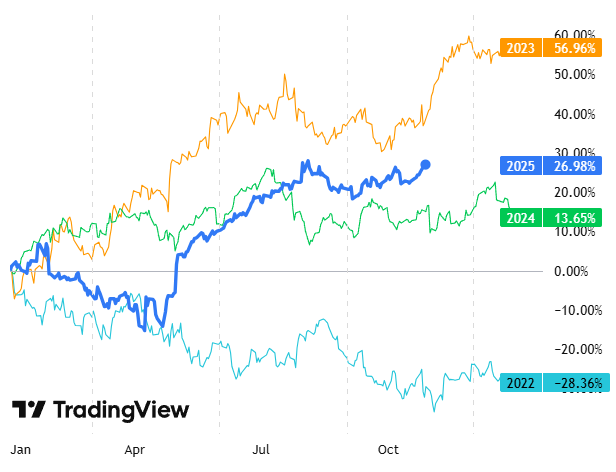
MSFT Seasonals – Performance per Year
MSFT Analysis & Forecast
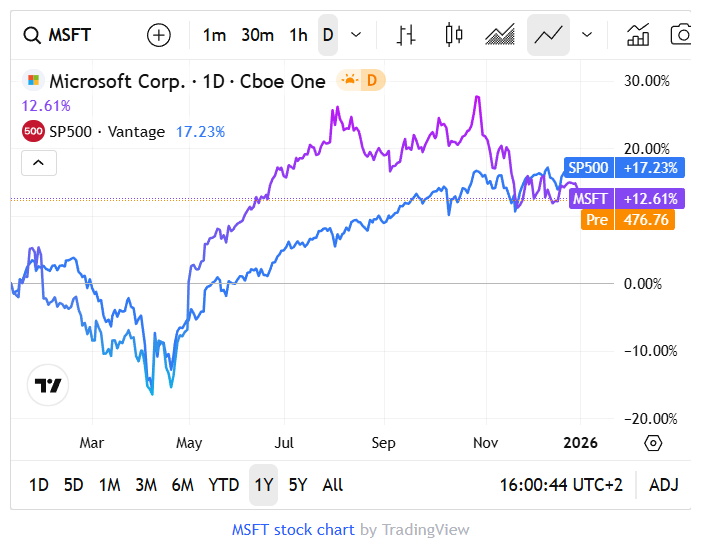
♦ Price: 531.52 USD
♦ Forecast Value: 1 year Average is 628.90 USD Upside: 18% in 2026
♦ Seasonals: Based on 4Year Average 17.30% Upside: -36%
♦ Asset Type: Share.
♦ Sector: Information Technology sector.
MSFT 2025 Performance
MSFT Current Performance
NVIDIA Corporation / NVDA
Initial assessment date: 29.10.2025
NVIDIA Corp engages in the design and manufacture of computer graphics processors, chipsets, and related multimedia software. In 2025, NVIDIA has solidified its dominance in AI and data center computing, achieving record-breaking financial performance and technological leadership.
NVDA Seasonals – Performance per Year
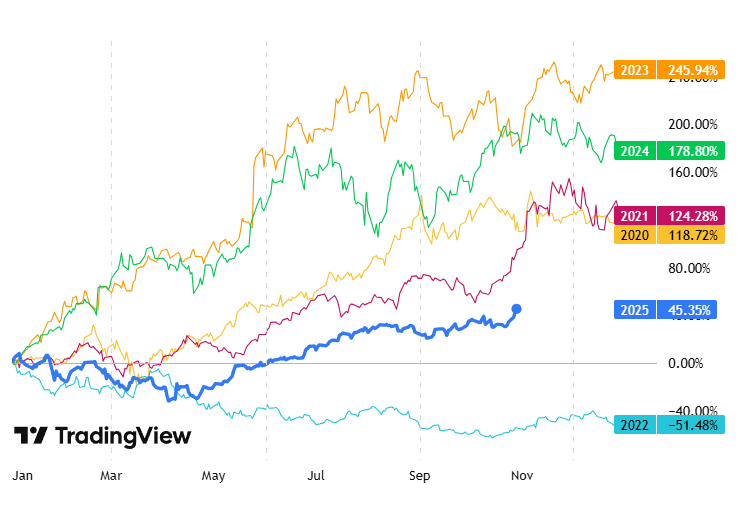
NVDA Analysis & Forecast
♦ Price: 201.03 USD
♦ Forecast Value: 1 year Average is 225.55 USD Upside: 11.9% in 2026
♦ Seasonals: Based on 4Year Average 104% Upside: 59%
♦ Asset Type: Share.
♦ Sector: AI, Data Centers & Cloud Computing, Gaming etc.
NVDA 2025 Performance
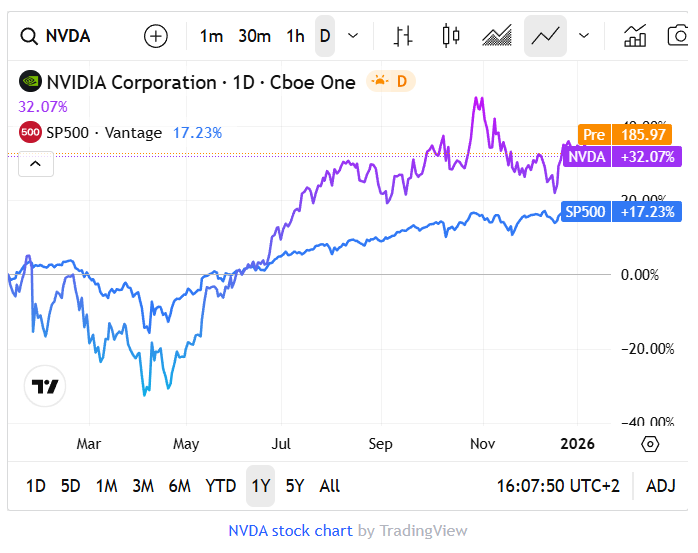
NVDA Current Performance
Netflix, Inc. / NFLX
Initial assessment date: 28.10.2025
Netflix, Inc. engages in providing entertainment services. It also offers activities for leisure time, entertainment video, video gaming, and other sources of entertainment. It is one of the strongest-performing stocks of 2025, with analysts forecasting up to a 23% upside over the next year.
NFLX Seasonals – Performance per Year
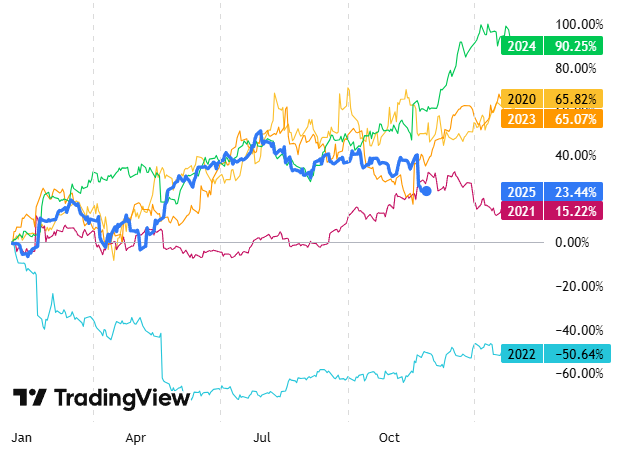
NFLX Analysis & Forecast
♦ Price: 1094.56 USD
♦ Forecast Value: 1 year Average is 1369 USD Upside: 25% in 2026
♦ Seasonals: Based on 4Year Average 32.03% Upside: 8.59%
♦ Asset Type: Share.
♦ Sector: Communication Services sector.
NFLX 2025 Performance
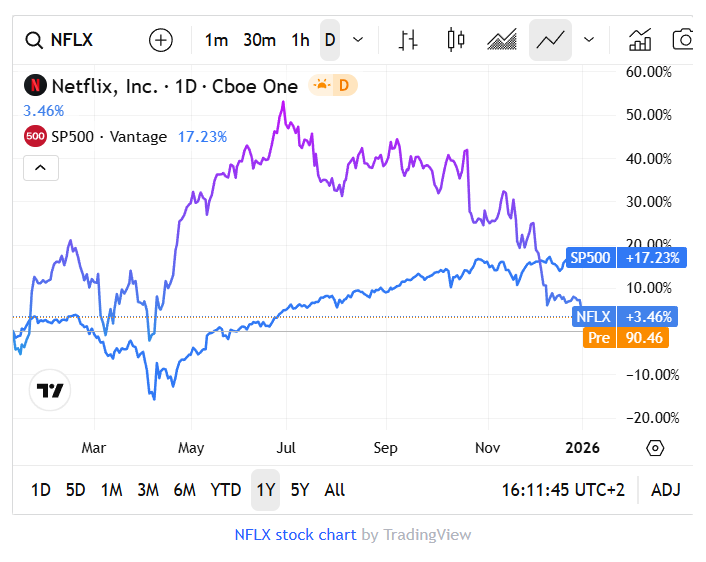
NFLX Current Performance
Tesla, Inc. / TSLA
Initial assessment date: 29.10.2025
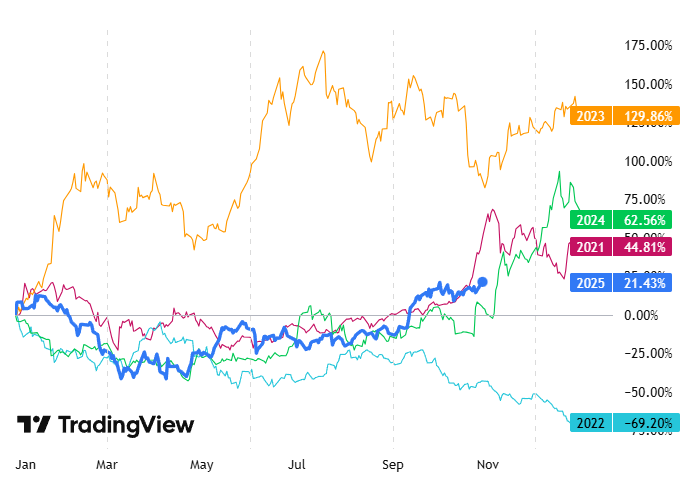
Tesla, Inc. engages in the design, development, manufacture, and sale of electric vehicles and energy generation and storage systems. It operates through the Automotive and Energy Generation and Storage segments. Tesla (TSLA) stock has surged over 35% in 2025, driven by optimism around AI, autonomous driving, and Elon Musk’s renewed leadership. Despite some volatility, it’s one of the standout tech performers this year.
TSLA Seasonals – Performance per Year
TSLA Analysis & Forecast
♦ Price: 460.55 USD
♦ Forecast Value: 1 year Max is 600 USD Upside: 30% in 2026
♦ Seasonals: Based on 4Year Average 36.16% Upside: 14.73%
♦ Asset Type: Share.
♦ Sector: Automotive and Technology sectors
TSLA 2025 Performance
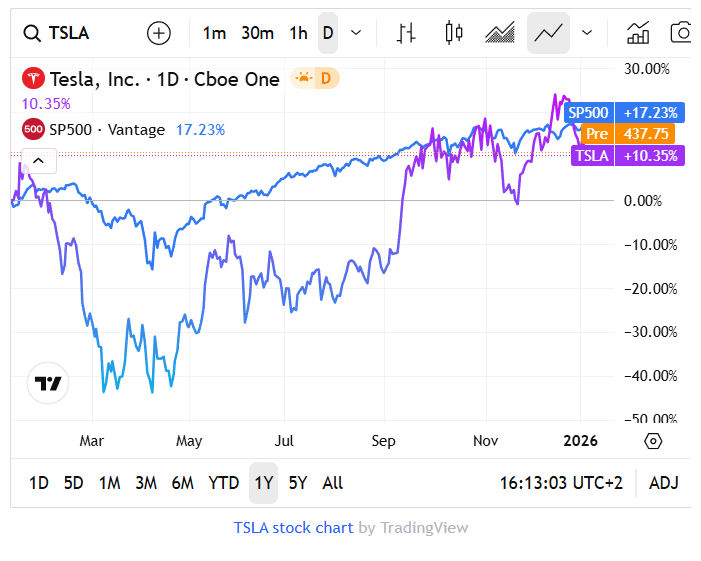
TSLA Current Performance
– Underlying Asset: US Stock Index – USTEC
In 2025, the USTEC index—which tracks major U.S. technology stocks—has shown strong bullish momentum. After a period of consolidation earlier in the year, the index broke out decisively, supported by rising volume and technical indicators. This rally reflects renewed investor confidence, especially in tech-driven sectors like artificial intelligence and cloud computing.
US Tech 100 Index (USTEC)
Initial assessment date: 21.10.2025
USTEC’s performance in 2025 highlights the resilience and growth of the U.S. tech sector amid shifting global economic conditions. The overall structure suggests minimal downside risk in the short term, with room for further gains if macroeconomic conditions remain favorable.
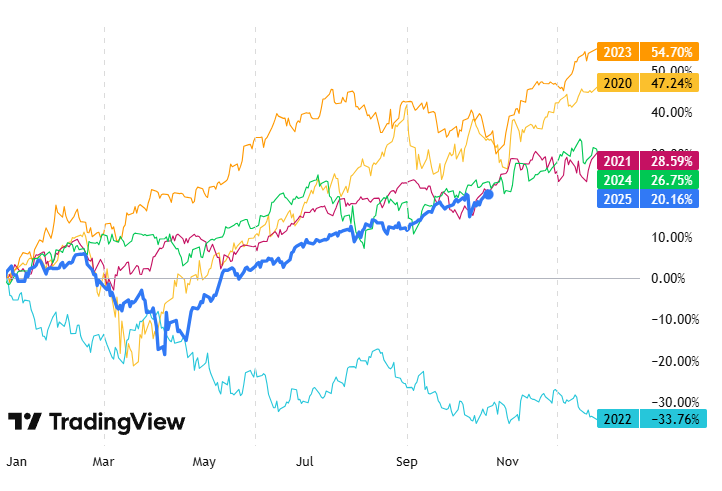
USTEC/NAS100 Seasonals – Performance per Year
USTEC/NAS100 Analysis & Forecast
♦ Price: 25,137 USD
♦ Forecast Value: 26,000 USD Upside: 3% EoY 2025
♦ Seasonals: Based on 4Year Average 19.28% Upside: -0.87%
♦ Asset Type: Stock Index.
♦ Sector: Tech Sector. Also includes exposure to several related sectors.
USTEC/NAS100 Current Performance
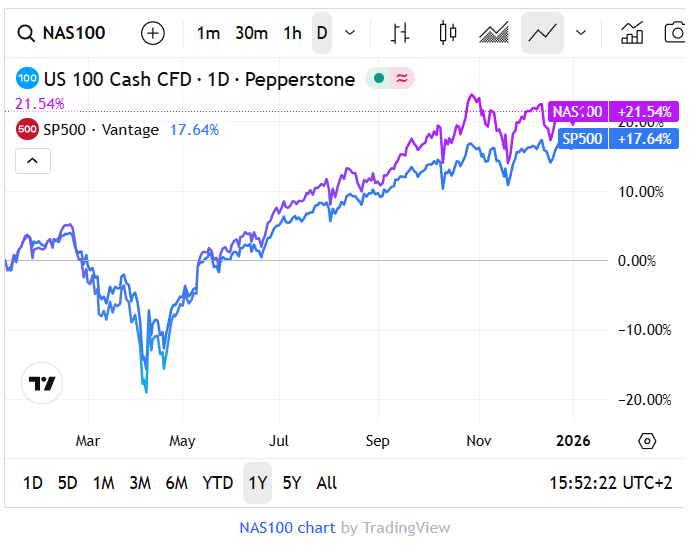
USTEC/NAS100 Current Performance
– Underlying Asset: Forex Pairs – USDJPY, USDCHF
In 2025, both USD/JPY and USD/CHF experienced notable volatility driven by diverging monetary policies, geopolitical shocks, and shifting safe-haven demand. USD/JPY declined overall, while USD/CHF remained relatively stable but trended lower. Investing in forex pairs like USD/JPY and USD/CHF can offer strategic opportunities when anticipating an expansionary monetary policy.
USDCHF
Initial assessment date: 28.10.2025
This pair acted as a safe-haven magnet during global uncertainty, especially when U.S. policy turned dovish. CHF remained a preferred safe-haven during geopolitical shocks, especially in mid-2025. The pair is forecast to rise through early 2026.
USDCHF Seasonals – Performance per Year
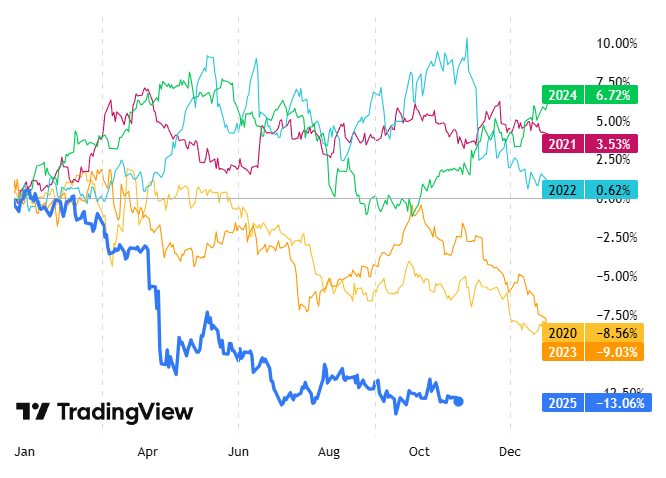
USDCHF Analysis & Forecast
♦ Price: 0.79313 USD
♦ Forecast Value: 0.8680 USD Upside: 9% in 2026
♦ Seasonals: Based on 4Year Average -3.69% Upside: 9.40%
♦ Asset Type: Forex Pair.
♦ Sector: Currency Market.
USDCHF 2025 Performance
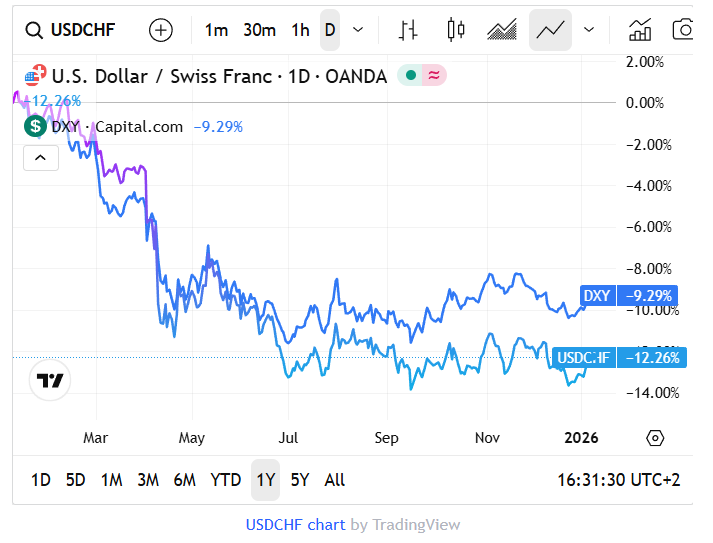
USDCHF Current Performance
USDJPY
Initial assessment date: 28.10.2025
Sensitive to U.S.–Japan rate differentials and carry trade flows. BoJ’s hawkish tilt in 2025 pressured the pair. The pair fell by approximately –2.88% over the year.
USDJPY Seasonals – Performance per Year
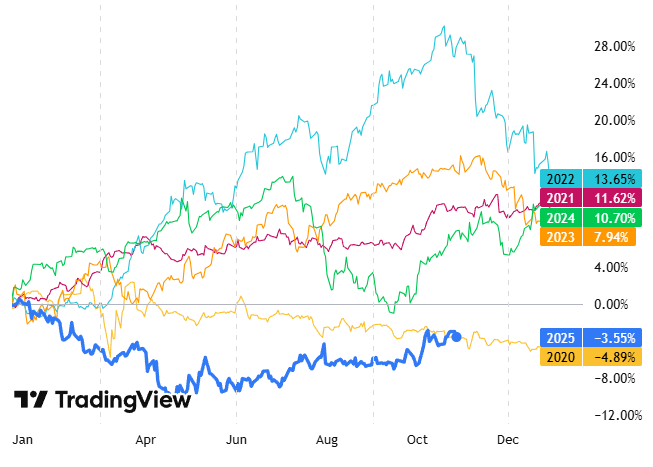
USDJPY Analysis & Forecast
♦ Price: 151.92 USD
♦ Forecast Value: 169.69 USD Upside: 11.6% EoY 2026
♦ Seasonals: Based on 4Year Average 7.22% Upside: 10.77%
♦ Asset Type: Forex Pair.
♦ Sector: Currency Market.
USDJPY 2025 Performance
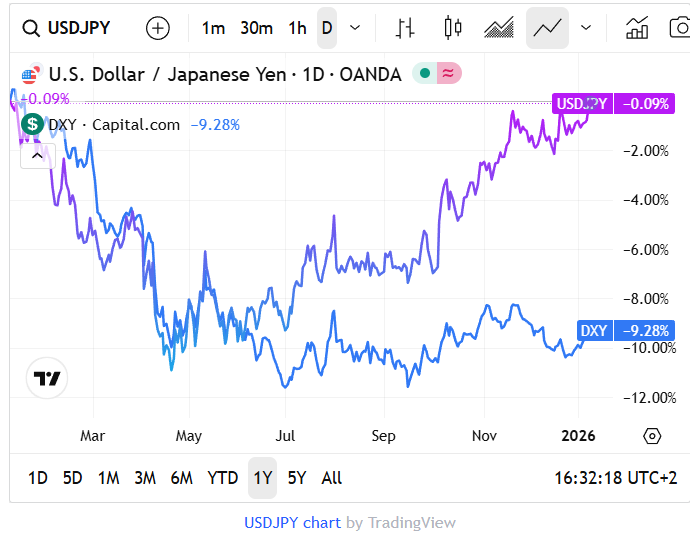
USDJPY Current Performance
– Underlying Asset: XAUUSD (Gold) –
In 2025, gold has surged to historic levels, hitting 39 new all-time highs. This rally has been fueled by massive investor demand. Amid economic uncertainty, geopolitical tensions, and a weakening U.S. dollar, gold’s safe-haven appeal has intensified. Central banks have ramped up their gold reserves, adding to global demand. Analysts forecast prices could climb to $4,900-$5000 by year-end, with some projecting higher in 2026. Sovereign Gold Bonds and ETFs remain popular investment vehicles, with ETFs favored for liquidity and SGBs offering tax-free returns.
Gold / XAUUSD
Initial assessment date: 21.10.2025
Gold is having a historic year in 2025, delivering its strongest performance since 1979. Economic uncertainty, geopolitical tensions, and a weaker U.S. dollar have driven investors toward gold. Analysts now predict gold could reach $4,900 per ounce by the end of 2025, with some even eyeing $5,000–$6,000.
XAUUSD Seasonals – Performance per Year
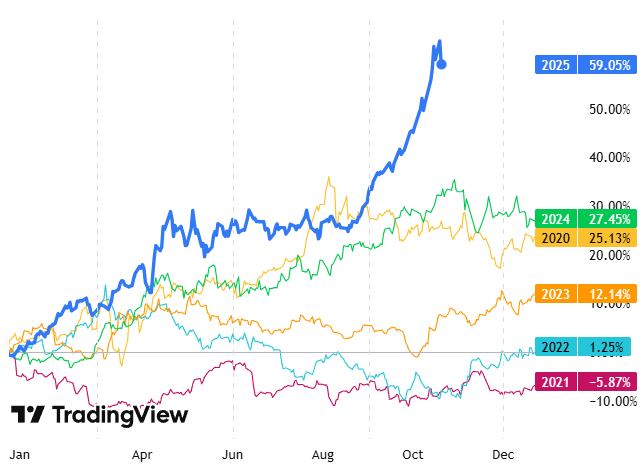
XAUUSD Analysis & Forecast
♦ Price: 4217.98 USD
♦ Forecast Value: 5000 USD Upside: 18.5% EoY 2025
♦ Seasonals: Based on 4Year Average 18.73% Upside: -39.96%
♦ Asset Type: Commodity.
♦ Sector: Consumer and Industrial sectors.
XAUUSD 2025 Performance
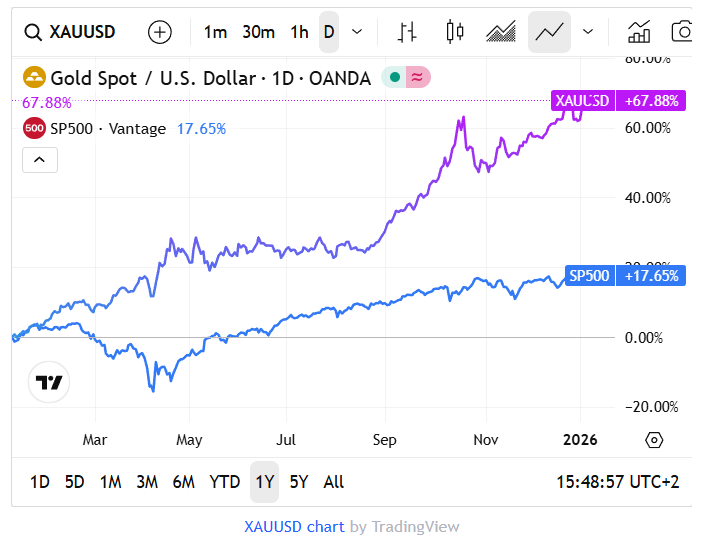
XAUUSD Current Performance
– Underlying Asset: Crypto –
2025 has been a transformative year for digital assets, marked by strong growth, institutional adoption, and technological innovation.The market has shifted away from hype-driven cycles to more sustainable growth. Bitcoin had a remarkable year in 2025, marked by strong price growth, institutional adoption, and favorable regulatory developments.
BTC/USD – Bitcoin US Dollar
Initial assessment date: 22.10.2025
Bitcoin Bitcoin had a strong year, driven by institutional adoption, regulatory clarity, and macroeconomic shifts. Analysts forecast potential highs of $200,000 by the end of 2025 if Bitcoin sustains momentum above key thresholds.
Major firms increased BTC holdings, boosting demand. U.S. policies became more favorable, encouraging institutional participation
BTC/USD Seasonals – Performance per Year
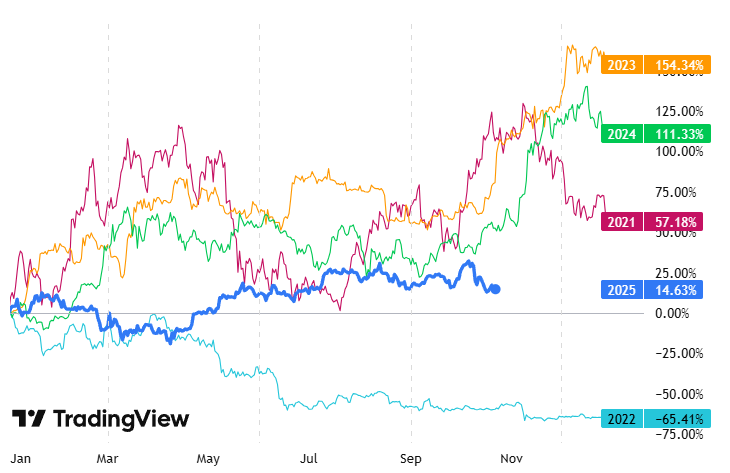
BTC/USD Analysis & Forecast
♦ Price: 108.180 USD
♦ Forecast Value: 200,00 USD Upside: 84% EoY 2025
♦ Seasonals: Based on 4Year Average 54.41% Upside: 39.78%
♦ Asset Type: Cryptocurrency.
♦ Sector: Cryptocurrency sector, financial technology (fintech).
BTC/USD 2025 Performance
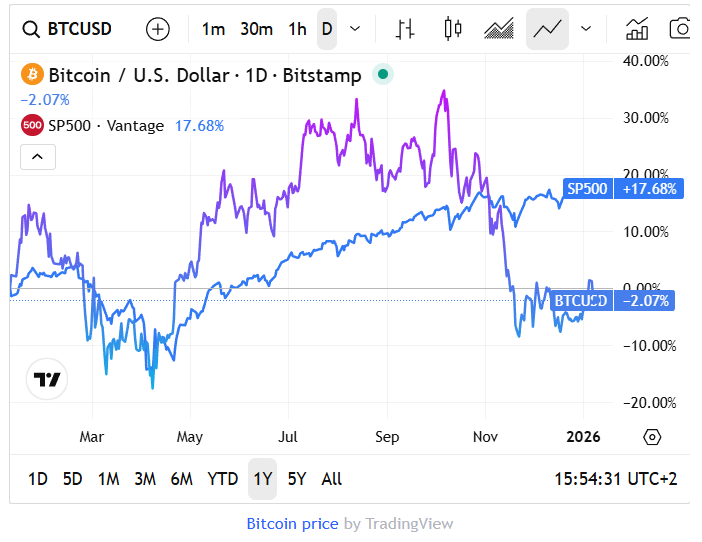
BTC/USD Current Performance
– Underlying Asset: Commodities – WTI Crude Oil
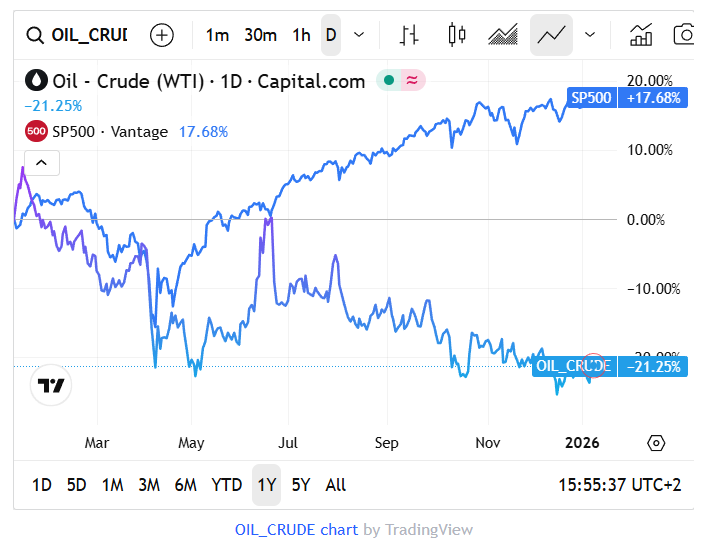
2025 was a volatile year for WTI, shaped by geopolitical tensions, shifting OPEC+ strategies, and global economic uncertainty. WTI fell moderately in August due to OPEC+ unwinding production cuts earlier than expected. While a U.S. government shutdown added uncertainty, the primary drivers were rooted in global supply-demand dynamics.
US Crude Oil / WTI
Initial assessment date: 22.10.2025
WTI crude oil prices fell significantly in 2025. OPECs+ supply glut overwhelmed demand recovery, pushing prices down. There was slower-than-expected economic recovery in China and Europe. U.S. demand growth stalled. A trade war initiated by the U.S. disrupted global supply chains, further suppressing oil consumption and investor confidence.
WTI Seasonals – Performance per Year
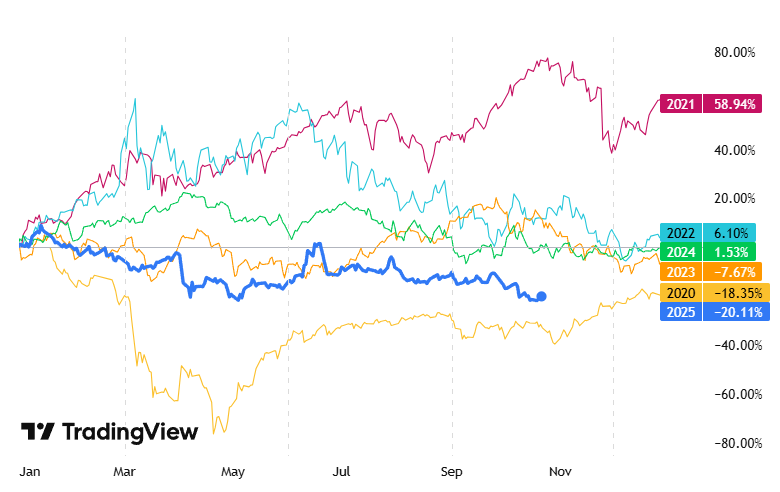
WTI Analysis & Forecast
♦ Price: 58.23 USD
♦ Forecast Value: 70 USD Upside: 20% EoY 2025
♦ Seasonals: Based on 4Year Average 7.75% Upside: 27.86%
♦ Asset Type: Energy/commodity.
♦ Sector: Energy sector.
WTI 2025 Performance